
Abraham’s Righteousness
Abraham’s Righteousness:
Faith Expressed Through Obedience
By Olivia Grace Pitt
Before there was religion or church, there was faith and prayer. The Bible presents Abraham as an example of a person who was counted righteous because he believed God. Abraham was Noah’s 10th-generation descendant through Shem, according to Genesis 11:10-26. Abraham’s righteousness was not earned through good deeds, instead, his obedience to the spoken word of God revealed his heart. His story helps us understand that biblical faith means being sure of what we hope for and certain of what we do not see (Hebrews 11:1), even when circumstances and physical evidence seem to contradict God’s promise.
Context
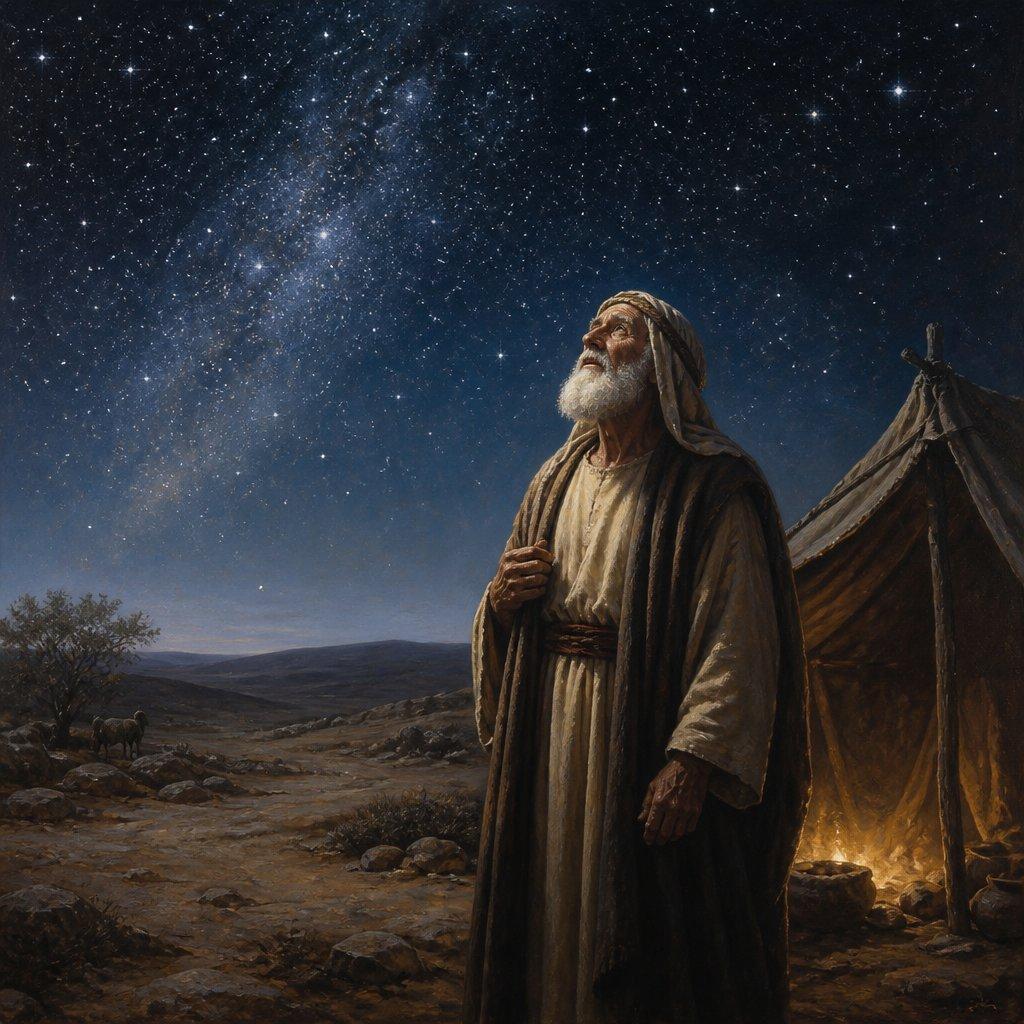
Genesis 15:6 says, “Abram believed the LORD, and he credited it to him as righteousness.” Prior to this moment, at the tower of Babel, God dispersed the people because of their rebellious pride. The genealogy that follows this dispersion traces the blessed line of Shem, son of Noah, to be the forefather of the Hebrews (Genesis 11). Then in Chapter 12 of Genesis, Abraham is called by God to be at the heart of His plan to reverse all that has gone wrong since Adam and Eve were expelled from the Garden of Eden. Abram was putting his survival, his identity, his future and his security in the hands of the Lord. This call was wrapped up in a sevenfold promise: God promised to make Abram into a great nation, bless him, make his name great, make him a blessing, bless those who blessed him, oppose those who cursed him, and bring blessing to all nations through him. By the time we get to Genesis 15, Abrams' faith is faltering so God appeared to him in a vision and the Lord graciously reinforced his promise with a covenant oath. Abram is honest with God and says his wife is barren so chances are his servant will inherit his promise. God then patiently takes Abram outside and tells Abram to count the stars if he can, and promises “So shall your offspring be” (Genesis 15:5). Then verse 6: “Abram believed the LORD, and he credited it to him as righteousness.” It means that obedience grows out of a trusting relationship with God instead of a way to purchase God’s acceptance.
Testing
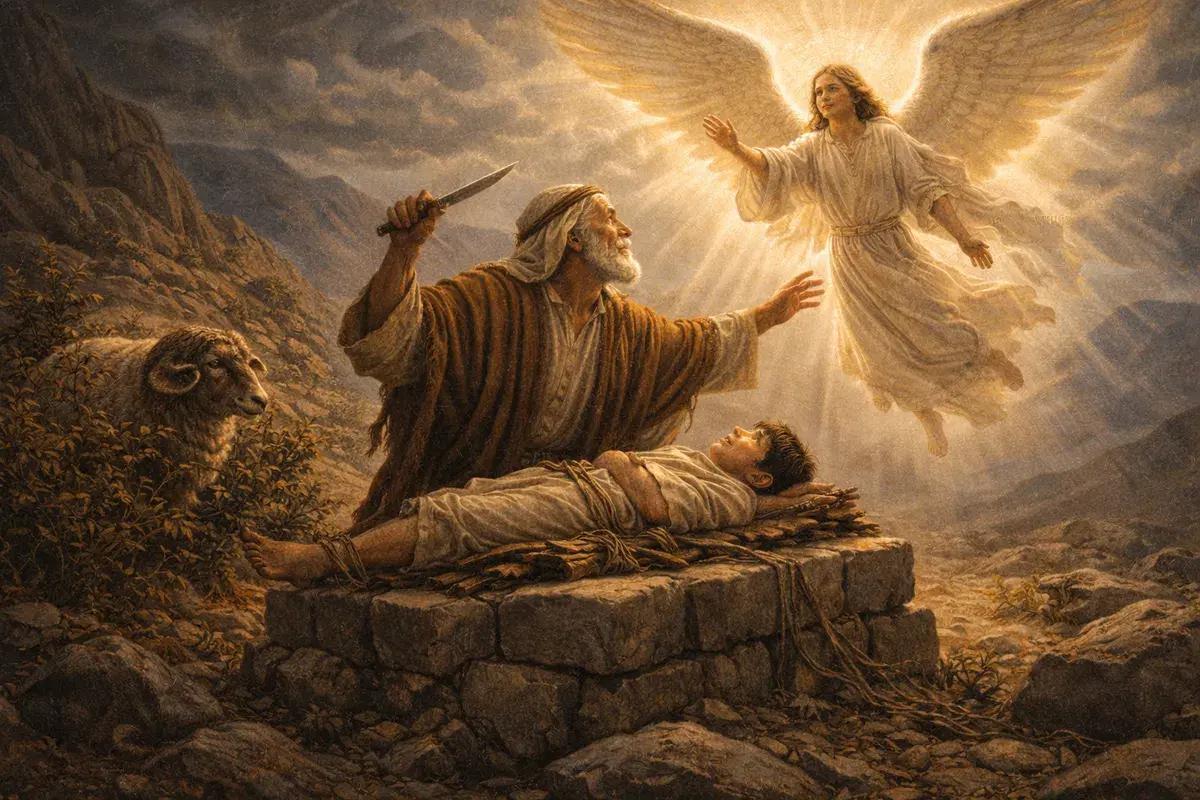
Abraham’s faith was tested through the command to offer Isaac. Genesis 22:9–12 describes Abraham building an altar, arranging the wood, and binding Isaac. When he reached for the knife, the angel of the LORD stopped him. Abraham had obeyed even though Isaac was the son through whom God had promised to establish Abraham’s descendants (Genesis 21:12). Abraham's faith showed itself through action. The writer of Hebrews states that Abraham reasoned that God could even raise the dead (Hebrews 11:19). The command appeared to conflict with the promise. Yet Abraham acted anyway in trust, believing that God remained faithful especially after Sarai his wife fell pregnant. The angel’s words were, “now I know that you fear God,” show that Abraham’s reverence was demonstrated through his willingness to obey. God stopped the sacrifice; the passage does not teach that God accepts human sacrifice. Instead, it teaches surrender to God and trust in God’s provision (Genesis 22:13–14). God provides what He demands.
Lessons
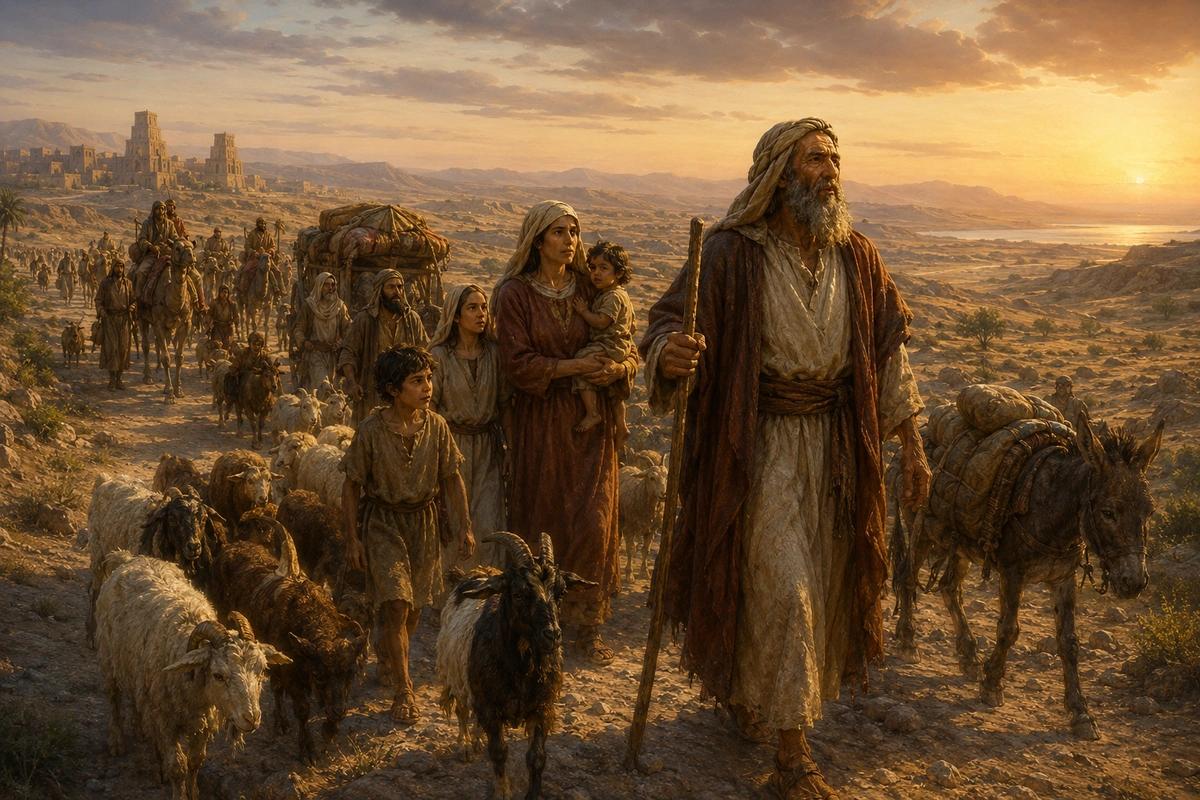
Hebrews 11:8–9 explains that Abraham obeyed when God called him to leave his homeland and go to a place he would later receive as an inheritance. He went without knowing exactly where he was going. He also lived in the promised land as a foreigner, dwelling in tents with Isaac and Jacob. His faith was therefore more than believing that God existed. He trusted God’s plan without immediate possession of what had been promised. Abraham’s confidence was ultimately in God’s power and faithfulness. Even after decades of walking and talking with God, Abraham never claimed to have figured God out. James 2:21–24 uses the same narrative to show that faith and actions belong together. James asks whether Abraham was “justified by works” when he offered Isaac, and says that his faith was working together with his actions and was made complete by what he did. James is challenging a claim to faith that produces no outward response. Paul and James address different errors using Abraham’s life as reference. The error of trying to earn righteousness and the error of claiming to believe without any outward evidence.
Conclusion
This understanding challenges the way Christians sometimes explain “faith without deeds is dead” (James 2:17). Church attendance, feeding the poor, serving in a ministry, and participating in church programmes can all be good expressions of faith. However, these activities do not automatically prove that someone trusts God; they can also be done for church recognition, christian habit, or religious pressure. Abraham’s example directs our attention more deeply to believing God’s promises in His word, both written and spoken, and following His instructions. Especially when obedience is difficult or the outcome is obscure. Abraham’s righteousness therefore teaches that faith in God is the root and obedience is its fruit. Abraham’s life reminds us that living faith rests in God sovereignty and, because it rests in Him, it moves when He calls.
Word Count: 868