Religion and Art
Before the Spirit Empowered Preachers, He Empowered Artists, Why?
"And I have filled him with the Spirit of God, with wisdom, with understanding, with knowledge and with all kinds of craftsmanship."
— Exodus 31:3
Introduction: The Things We Remember
Human beings have always sought ways to preserve what matters most.
Long before libraries, printing presses, and digital archives, societies preserved their deepest beliefs through stories, symbols, songs, architecture, carvings, and sacred spaces. Throughout history, art has served as more than decoration. It has been a repository of memory, a vehicle for teaching, a means of communication, and a witness to truth.
This reality is evident in every major religion. Christianity has its cathedrals, hymns, icons, and stained-glass windows. Islam expresses devotion through breathtaking calligraphy, geometric design, and architecture. Hinduism communicates spiritual truths through temple sculpture, dance, music, and visual symbolism. Buddhism employs mandalas, statues, and sacred imagery to guide contemplation. Judaism preserves identity through sacred objects, illuminated texts, music, and ritual craftsmanship. Across cultures and centuries, faith and creativity have consistently travelled together.
Yet within Christianity lies a remarkable truth that is often overlooked.
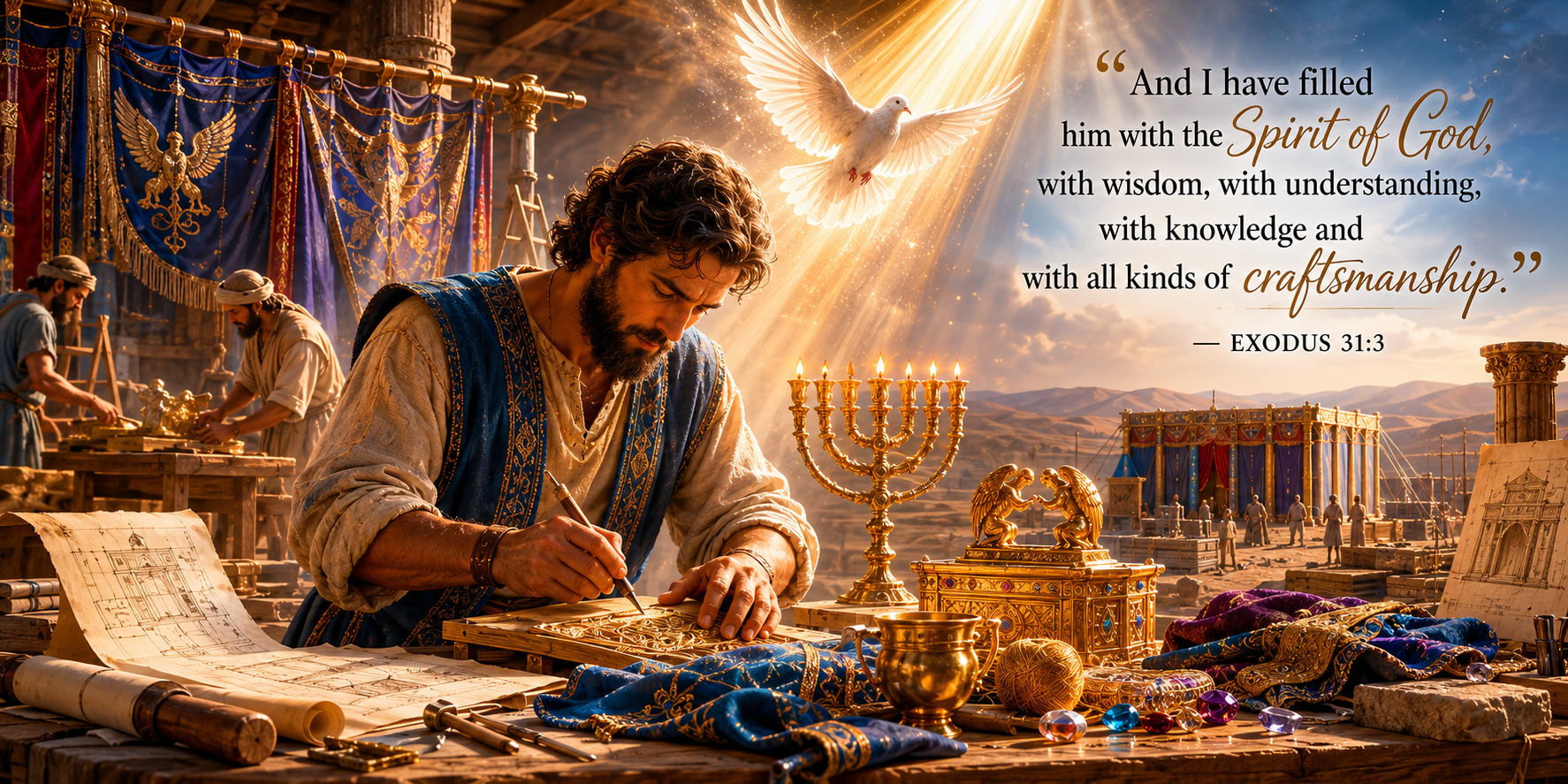
The first people in Scripture explicitly described as being filled with the Spirit of God were not prophets, kings, priests, evangelists, or preachers.
They were artists.
Their names were Bezalel and Oholiab.
The significance of this fact cannot be overstated.
When God instructed Moses concerning the construction of the Tabernacle, He did not merely appoint skilled craftsmen. He specifically empowered them through His Spirit:
"See, I have chosen Bezalel son of Uri, the son of Hur, of the tribe of Judah, and I have filled him with the Spirit of God, with wisdom, with understanding, with knowledge and with all kinds of skills—to make artistic designs..." (Exodus 31:2–4)
Later Scripture repeats this emphasis:
"He has filled them with skill to do all kinds of work as engravers, designers, embroiderers... and weavers—all of them skilled workers and designers." (Exodus 35:35)
The first recorded Spirit-filled ministry in the Bible was artistic ministry. Why?
Why would God choose artists before preachers? Why would the Spirit first empower creativity before proclamation?
The answer reveals something profound about God's nature, humanity's purpose, and the role of art in preserving truth.
God the First Artist
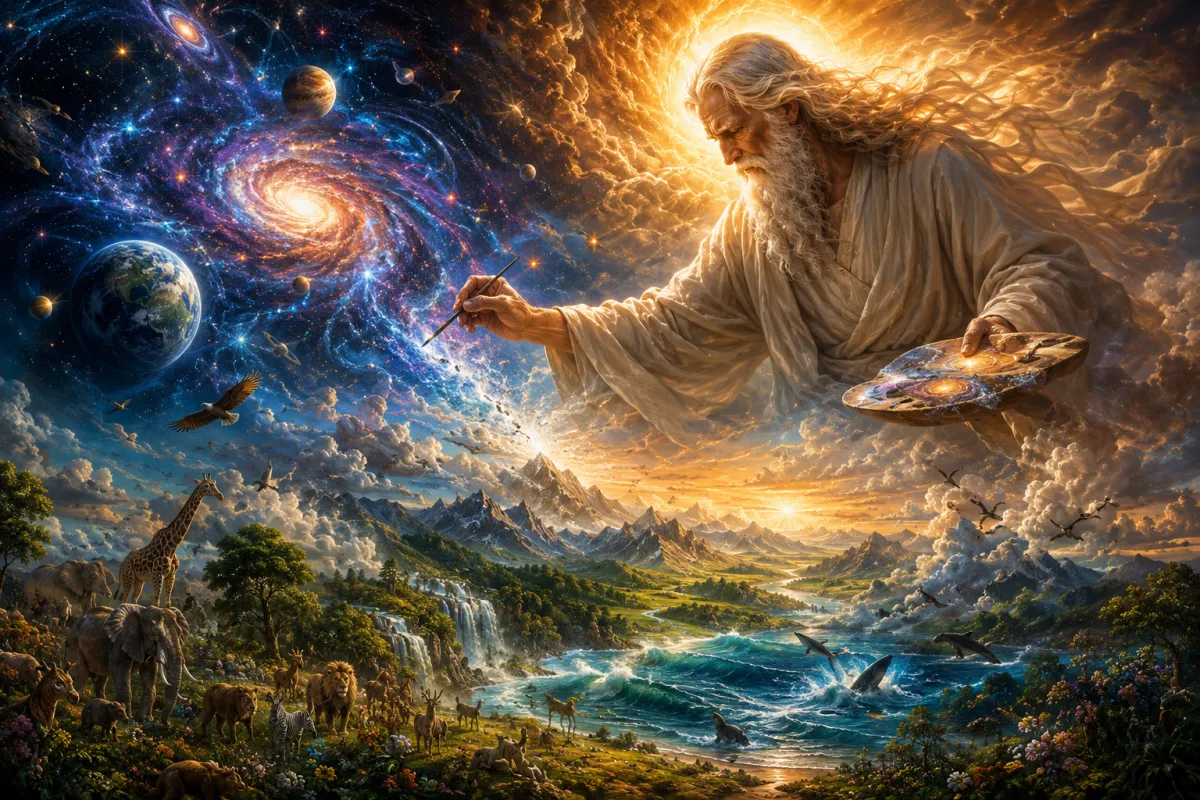
The Bible opens not with a sermon but with creation.
Before there were commandments, covenants, priests, prophets, kings, or churches,
there was beauty. Genesis presents God as the ultimate Creator. Light and darkness are separated.
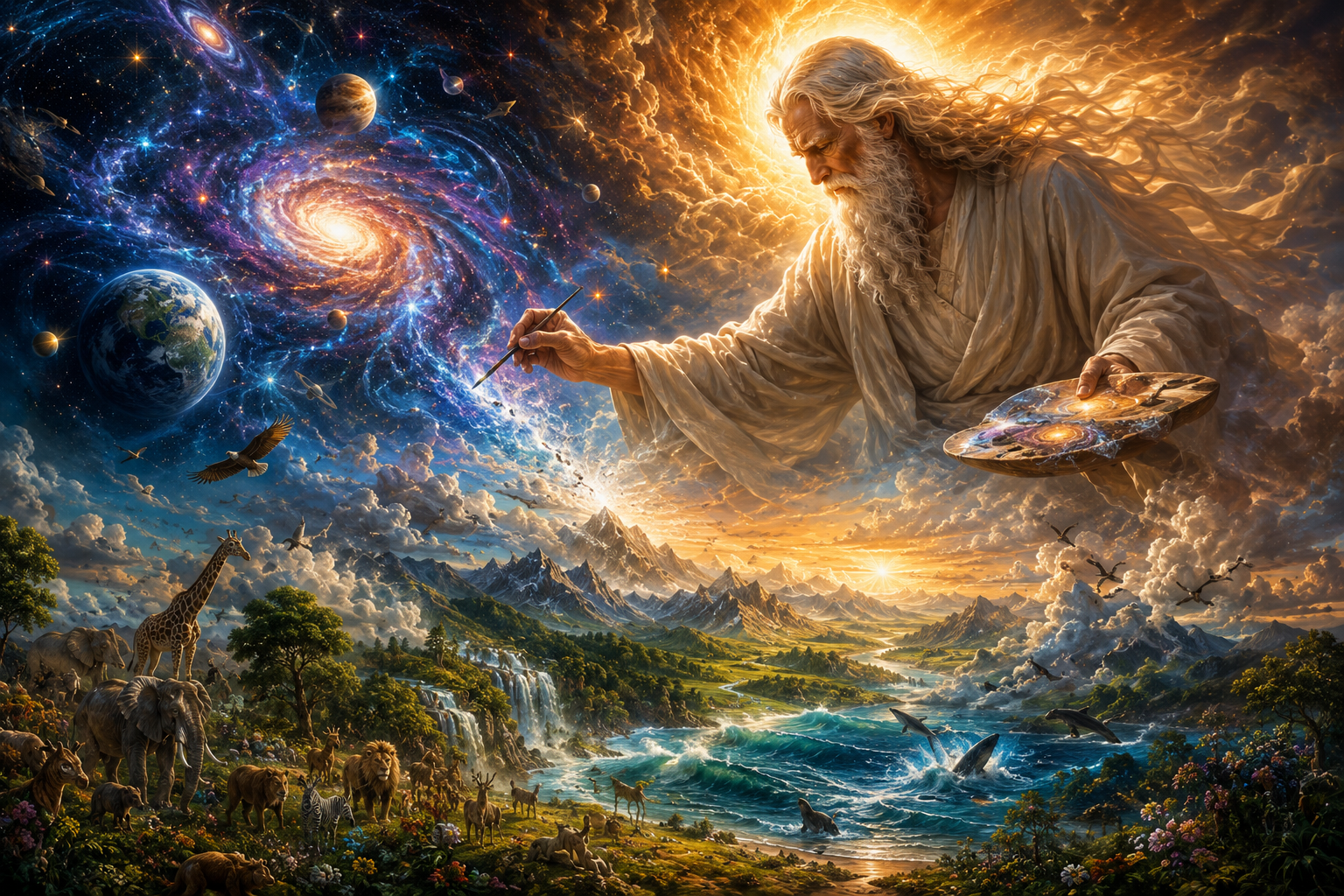
Oceans are formed. Mountains rise from the earth. Vegetation appears in astonishing variety. Stars fill the heavens. Birds soar through the skies. Fish populate the seas.
Creation reveals both function and beauty.
God could have created a purely utilitarian world. Instead, He created colour, diversity, rhythm, harmony, and wonder. The Psalmist later reflected:
"The heavens declare the glory of God; the skies proclaim the work of his hands." (Psalm 19:1)
Creation itself is God's first gallery.
If humanity is created in the image of God (Genesis 1:27), then humanity's impulse to create reflects something of the Creator. The desire to write, compose, paint, sculpt, design, sing, and tell stories is not merely cultural. It is deeply theological.
Creativity is one of the ways humanity reflects its Maker.
Why God Commissioned Art
The Tabernacle could have been functional. A simple tent would have sufficed.
Yet God commanded gold-covered furnishings, embroidered curtains, carved cherubim, precious stones, artistic designs, colourful fabrics, and carefully crafted priestly garments. Exodus 28:2 records God's instruction concerning Aaron's garments:
"Make sacred garments for your brother Aaron to give him dignity and honour."
Other translations render the phrase as "for glory and for beauty."
Beauty was not an accident. Beauty was commanded. Similarly, Solomon's Temple was filled with artistic symbolism. According to 1 Kings 6:29:
"On the walls all around the temple... he carved cherubim, palm trees and open flowers."
The Temple contained bronze pillars, pomegranates, lilies, carved imagery, and intricate decorative elements. These artistic features served purposes beyond aesthetics. They communicated theological truths. They reminded worshippers of God's holiness.
They reflected creation, paradise, covenant, and divine order.
Art became theology in visible form.
Art as Memory
One of the most important functions of religious art is remembrance.
Throughout Scripture, God repeatedly commands His people to remember. The Passover served as a memorial. The twelve stones taken from the Jordan River served as a memorial (Joshua 4). The Ark of the Covenant served as a reminder of God's presence and covenant. Human beings are forgetful creatures. Art helps preserve memory. A song can carry truth across generations. A symbol can communicate meaning instantly. A building can embody a story.
A painting can preserve a narrative.
The Book of Psalms demonstrates this principle powerfully. Many of Israel's most important theological truths were preserved not merely as teachings but as songs.
Psalm 78 begins:
"I will utter hidden things, things from of old—things we have heard and known, things our ancestors have told us."
Music became a vehicle for preserving collective memory.
The same principle appears throughout church history. Many believers remember hymns learned in childhood long after they have forgotten entire sermons.
Art often preserves truth when memory fails.
Art as a Second Witness
Scripture frequently establishes truth through multiple witnesses.
Written revelation communicates truth through language. Art communicates truth through symbol, experience, imagination, and emotion. The Bible itself contains artistic forms of communication. The Psalms are poetry. The Song of Songs is literature. The prophetic books are filled with imagery and symbolism.
The visions of Ezekiel, Daniel, Zechariah, and Revelation are rich in visual language.
God did not choose to communicate solely through legal texts or doctrinal statements. He employed narrative, metaphor, poetry, imagery, architecture, symbolism, and song. Truth was not only spoken.
Truth was also illustrated.
In this sense, art functions as a companion witness to revelation. It reinforces, illuminates, and preserves what words alone communicate.
Art During Times of Persecution
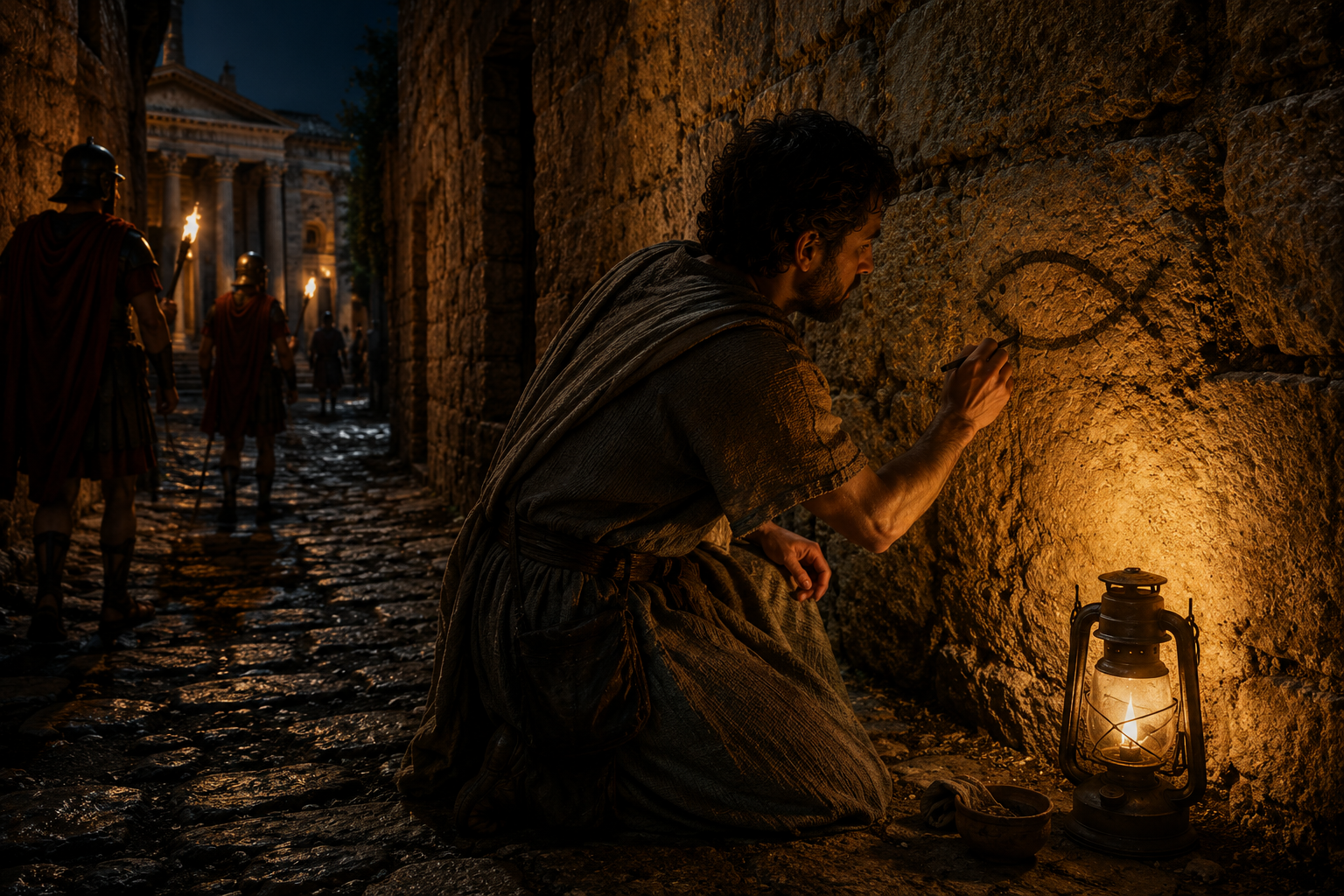
Art often becomes a language of survival.
The early Church provides a compelling example. During periods of Roman persecution, Christians frequently communicated through symbols.
The fish symbol, known as the Ichthys, served as a discreet confession of faith. Catacomb paintings preserved biblical narratives and theological hope. Images of the Good Shepherd communicated Christ's care without attracting unnecessary attention.
When words became dangerous, symbols continued speaking. This pattern extends beyond Christianity. Across cultures and centuries, oppressed communities have often turned to music, poetry, symbolism, and visual art as means of preserving identity and communicating truth.
Art can survive where speech is censored.
Art can endure where books are burned.
Art can communicate what cannot safely be said.
Religion and Art: A Universal Partnership
The relationship between religion and art is not unique to Christianity.
Across human history, faith and creativity appear inseparable.
Islam developed magnificent traditions of calligraphy, geometric design, architecture, ceramics, textiles, and decorative arts. Sacred words became visual beauty.
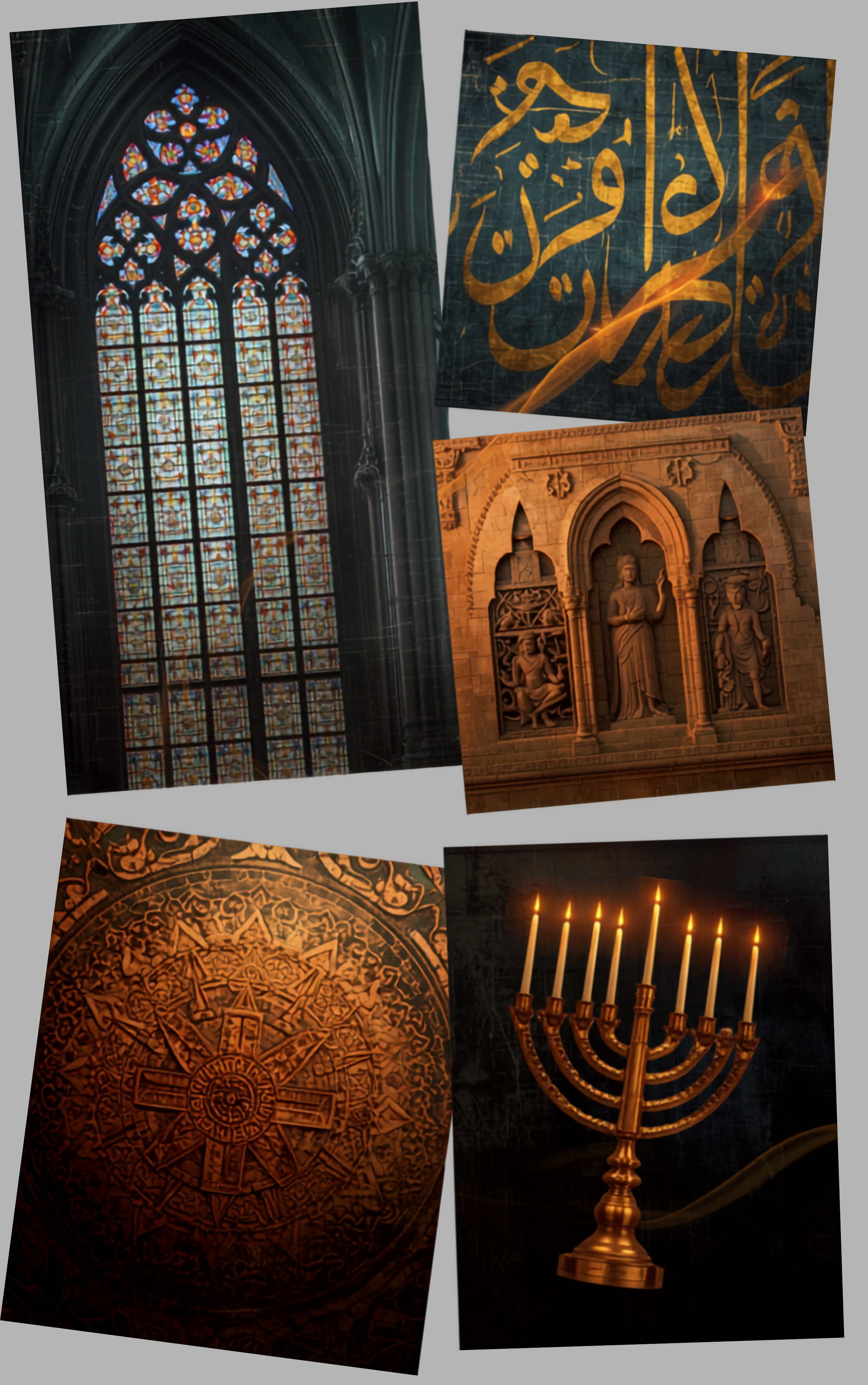
Hinduism expresses spiritual realities through sculpture, temple architecture, dance, music, painting, and storytelling. Entire theological systems are embodied through artistic forms.
Buddhism employs mandalas, statues, sacred architecture, ritual arts, and visual symbolism to support meditation and spiritual formation.
Judaism preserves faith through sacred objects, music, scriptural calligraphy, symbolic imagery, and ceremonial craftsmanship.
Indigenous traditions around the world integrate art into ritual, memory, storytelling, and communal identity.
These diverse traditions reveal a profound reality. Human beings instinctively transform faith into creativity. The sacred naturally seeks expression.
Music, Poetry, and Dance in Scripture
The Bible contains numerous examples of artistic worship.
Miriam celebrated Israel's deliverance through song and dance:
"Then Miriam the prophet... took a timbrel in her hand, and all the women followed her, with timbrels and dancing." (Exodus 15:20)
David danced before the Lord:
"David, wearing a linen ephod, danced before the Lord with all his might." (2 Samuel 6:14)
The Psalms repeatedly encourage artistic praise:
"Let them praise his name with dancing..." (Psalm 149:3)
"Praise him with timbrel and dancing..." (Psalm 150:4)
David also organised thousands of musicians for temple worship:
"Four thousand are to praise the Lord with the musical instruments I have provided." (1 Chronicles 23:5)
Even more significantly:
"David, together with the commanders of the army, set apart some of the sons of Asaph, Heman and Jeduthun for the ministry of prophesying, accompanied by harps, lyres and cymbals." (1 Chronicles 25:1)
Music was not entertainment....It was ministry. Art was not peripheral... It was integral.
The Digital Bezalels
The tools have changed, but the calling remains.
Bezalel worked with gold, silver, wood, precious stones, fabrics, and embroidery.

Today's artists work with cameras, computers, publishing platforms, graphic design software, websites, film, photography, digital illustration, artificial intelligence, and multimedia storytelling.
The medium has evolved. The mission has not.
Writers, designers, musicians, filmmakers, photographers, web developers, illustrators, and digital creators continue a tradition that stretches back to the wilderness of Exodus.
They help make truth visible... They preserve memory... They communicate meaning.
They point beyond themselves toward something greater.
In a world saturated with competing narratives, Christian artists have a unique responsibility. They are called not merely to create beautiful things, but to create works that bear witness to truth.
The Church rightly celebrates pastors, teachers, missionaries, and evangelists. It should also remember Bezalel and Oholiab. For before the Spirit empowered preachers, He empowered artists. Before He commissioned sermons, He commissioned beauty. Before He raised pulpits, He raised craftsmen.
And perhaps in an increasingly visual and digital age, God is once again reminding His people that creativity is not secondary to His purposes. It has always been one of the ways He reveals His glory, preserves His truth, and calls humanity to remember Him.
Reflection: What role has played in your faith?
Subscribe to our Newsletter for monthly emails on the latest Blog posts here.
Keywords: religion and art, Christian artistry, Bezalel and Oholiab, Spirit-filled artists, biblical creativity, God and art, faith and creativity, Christian artists, art in the Bible, religious symbolism, sacred art, biblical architecture, Christian storytelling, creativity as worship, Exodus 31, Holy Spirit and creativity, religious art history, art and faith, Christian writers, spiritual creativity, theology of art, The Religious Lens.